
Thinking about thinking about thought
Pataphysics

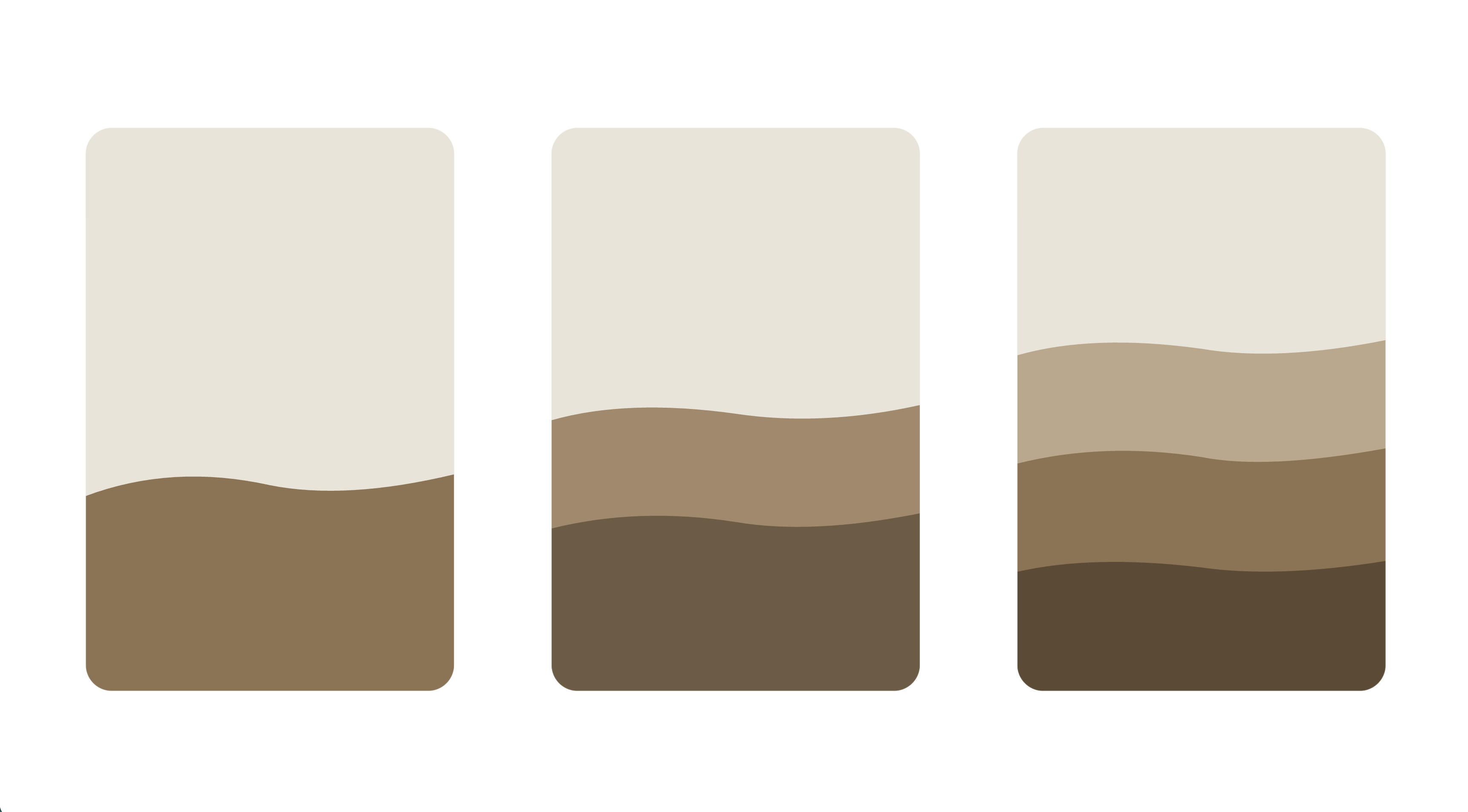
Solidification of the base layer of thought, like the stratification of sedimentation over time. When the floor gains a dimension, some height: when the ontological gap opens up. This is where the trouble begins, indeed, as demonstrated by the Buddhist tradition. Simulation as a concept, we can make cover the whole edifice of existence itself, for reality was only ever a structural lack, and through this reach a possible enlightenment.
But what happens when the gap grows and grows? One can think about reality, formulate, create a gap between themselves and the world. But what happens when we think about thinking? Well this is interesting, this is fine, this is philosophy. The issue now comes when this first layer of thought solidifies, and the second layer of thought then settles on top - now this second layer is neither exciting nor original nor philosophy: because one forgets that they were thinking about thought, and it occurs to them that they are just thinking. But this is not the objective truth of the situation, one of the few beautiful, paradoxical points of genuine objectivity we can arrive at structurally. In the same way we can say that objectively, in the pure world of computer science, it cannot be computed whether a Turing machine will halt for an input or not. In the same way we can say that objectively, in the pure world of mathematics, that a mathematical system will always be incomplete, that it will contain true statements that are unprovable.
In the same way, we can say that objectively, in the pure world of thought, that when the first layer hardens, and the second layer comes to be falsely seen as the first layer, that this is then a simulation of first-layer thought, and so a simulation of reality.
What is this ‘hardening’ of the first layer then: its analog would be the process of documenting, analyzing, circumscribing, modeling, predicting, computing. A cybernetic process of fixing inputs and measuring outputs, a process that today is everywhere, at the core of our lives, constantly, and that hardens this reality into a frozen copy of itself. Freezing a copy of reality can be useful indeed: it allows us to reflect on things over time, revisit notes or images or memories, disseminate knowledge across the globe. Beautiful.
Now we think about our notes, our images, our memories. We reflect, but we increasingly reflect only by staring at this frozen copy. As we reflect, we forget that what we have done is frozen time, and eventually we forget to go back and unfreeze reality. We get to a point where our documented and analyzed existence seems to line up very nicely indeed with the reality we had frozen. And now, we start reality (or history, take your pick) again by creating our own, from our models: this is what is known as hyperreality, a perfectly modeled, perfectly predictable reality, the integrated circuit of the real, made of operations and inputs and outputs, operations that provide all the signs of the real while short-circuiting its vicissitudes. A simulation.
This hyperreality, consisting of a plenitude of simulations, lines up with that previous reality, (or rather all we ever had was that first layer of representation of reality, but this could be said to be an honest, profound reflection), but it is not that previous reality, that reality is still on hold.
The mobile phone could be said to be a reality-freezing device, fundamentally. Photos, videos, notes, voice recordings, texts, phone calls (here we only log the time of the call and some other metadata, perhaps we will get to the point of live-playback phone calls: on second thought, the inarguable rise of texting over calling in younger generations already serves this purpose of rigorous documentation and is perhaps part of the reason why younger generations opt to text to begin with, although certainly along with other factors such as it being easier to present oneself according to an ideal schema), the phone is a representation-device, but it also then tends towards the model of perfection for its user. The instagram page or story is pored over, texts are deleted or resent or edited, the email inbox full of advertising and spam is meticulously cleared, and so on: we tend to our models of ourselves, our clones, as one would housekeep and tidy or tend to a garden. We incessantly clean, organize, categorize our representations, and the providers of this technology only lean into our love of housekeeping more and more. One would think we almost treat this model as if it were generative of our reality.
It is important not to get caught up in the turn this discourse takes: we then imagine an increasingly terrifying matrix-like scenario, where we are slowly absorbed by our machine gods. Perhaps this will take place on the side, and will certainly not be unrelated, but the main process of interest is this: any time we are now not tending to our models, that is documenting and analyzing and organizing and posting, they would then be in the mode of generation. Again, not generating pixels from a device, although yes this could certainly happen, but the key is generating (your) reality from a model in your head. One can understand this with ease if we consider a thought experiment that lends itself nicely to our pop culture that has otherwise further muddied the waters on understanding this phenomenon: would Neo, once he wakes up from his machine-pod in the matrix, not instead believe that this is now the dream, and prefer to be plugged back in? Perhaps he would beg, kick, scream, viciously scramble, or end his life, instead of being trapped in this strange world that he has only been told by someone is the ‘real real’. Because Neo’s reality is now the machinic simulation he has come out of: that is not up for debate. First layer thought having hardened, it is inaccessible to him save through extreme mental work and trauma over many many years (perhaps, we could probably agree, it might be impossible for him to return to the desert of the real). We can now espouse an alternative and poetic definition of hyperreality: more real than the real, that is how the real is abolished.
Again, let us take a step back, as we have got caught up in a physicalist, materialist, pop culture retelling. The point is this: we roam the desert of the real, for sure; we have not yet been absorbed into our devices, atomized into our shoebox homes; but we roam this desert simulating. Simulating, and at the same time with an attitude of savage, productivist imperialism: what can we document and analyze more of to perfect our own model(s) further. Not only are we attempting to perfect this (hyper)reality through an operationalized, short-circuited modeling, but one must not forget that we are part of this hyperreality, and so we are perfecting ourselves, according to our models of perfection, which are simultaneously our models of simulation.
We will live in this world, which for us has all the disquieting strangeness of the desert and of the simulacrum, with all the veracity of living phantoms, of wandering and simulating animals that capital, that the death of capital has made of us - because the desert of cities is equal to the desert of sand - the jungle of signs is equal to that of the forests - the vertigo of simulacra is equal to that of nature - only the vertiginous seduction of a dying system remains, in which work buries work, in which value buries value.
We represent using representation. Simulation. We are one layer removed from reality, a reality that is by now unobtainable since every sign around us is a resurrection, a hysterical, historical retrospection of a deep frozen reality that we long ago left. Reality, bloated and cold, animated through operational, technological ventriloquism. It feels to us as if we are watching this nightmare stuck behind a pane of glass. Who is really trapped? The scientist or the specimen made to dance?
We are then led to the idea of a collapse between the ‘map’ and the ‘territory’, the real and the imaginary, a loss of the “sovereign difference that constituted the charm of the of the real and the magic of the concept”. For how can one dream, really dream, when they are already served up their reality, when time is wiped out by the pure circulation of images generated by models, when desire no longer has the chance to arise because it is always already sated.
We can return to the power of simulation as a spiritual concept now. We can define simulation to cover even the first layer of thought now, and we then open up the world of being to our exploration: reality is nothing? Well, we are led to reality is a fundamental illusion, and this is explored in Impossible Exchange by Jean Baudrillard.
A final concept that seems pertinent to this essay is pataphysics. In one line: pataphysics to me is thinking about thinking about thought. A third layer of sedimentation. Ludicrous in any other world, but in this universe where the first layer has hardened, we require a third layer from which to analyze the entire situation, from which to place ourselves from a point outside of model-generated hyperreality. An example of an excellent piece of pataphysics is Pataphysics of the Year 2000 in Jean Baudrillard’s Illusion of the End. Effectively, since reality is on pause, and so since history is on hold, we can then say that the year 2000 did not (will not, at the time of the book) take place. Or, we can say that the Gulf War never really took place. We can say that all events, in fact, are ‘on strike’.
Pataphysics, a refuge for the last glimmers of imagination and reality.